Investment migration is a significant decision, and most families rely on professional help to navigate it. The quality of that help varies. A good adviser protects your time, your reputation and your investment. A poor one can lead to the wrong programme, a refused application or worse. Knowing the warning signs makes the choice far easier.
Red flags to watch for
Some patterns should give you pause, however polished the presentation.
- Guaranteed outcomes. No adviser can guarantee approval. Decisions rest with governments, and due diligence is independent. Anyone promising a certain result is either misinformed or misleading you.
- Pressure to decide quickly. Deadlines do sometimes matter when rules change, but constant urgency is a sales technique. A sound decision can withstand a few days of reflection.
- One programme for everyone. If every conversation leads to the same programme or the same property, the advice may be shaped by commission rather than your needs.
- Vagueness about who they are. You should be able to see who you are dealing with, where they are established and how they are regulated or authorised, where that applies.
- Reluctance to put things in writing. Scope, responsibilities and terms should be documented clearly before any commitment.
- Shortcuts on due diligence. Suggestions that documents can be smoothed over, or that a source-of-funds explanation can be simplified beyond the facts, are serious warnings.
- Unclear handling of your money. You should understand exactly where investment funds go and why. Payments should generally flow through proper, traceable channels set by the programme.
- Outdated information. Advice that does not reflect recent changes suggests the adviser is not keeping up.
What good professionals do
The best advisers tend to share a recognisable approach.
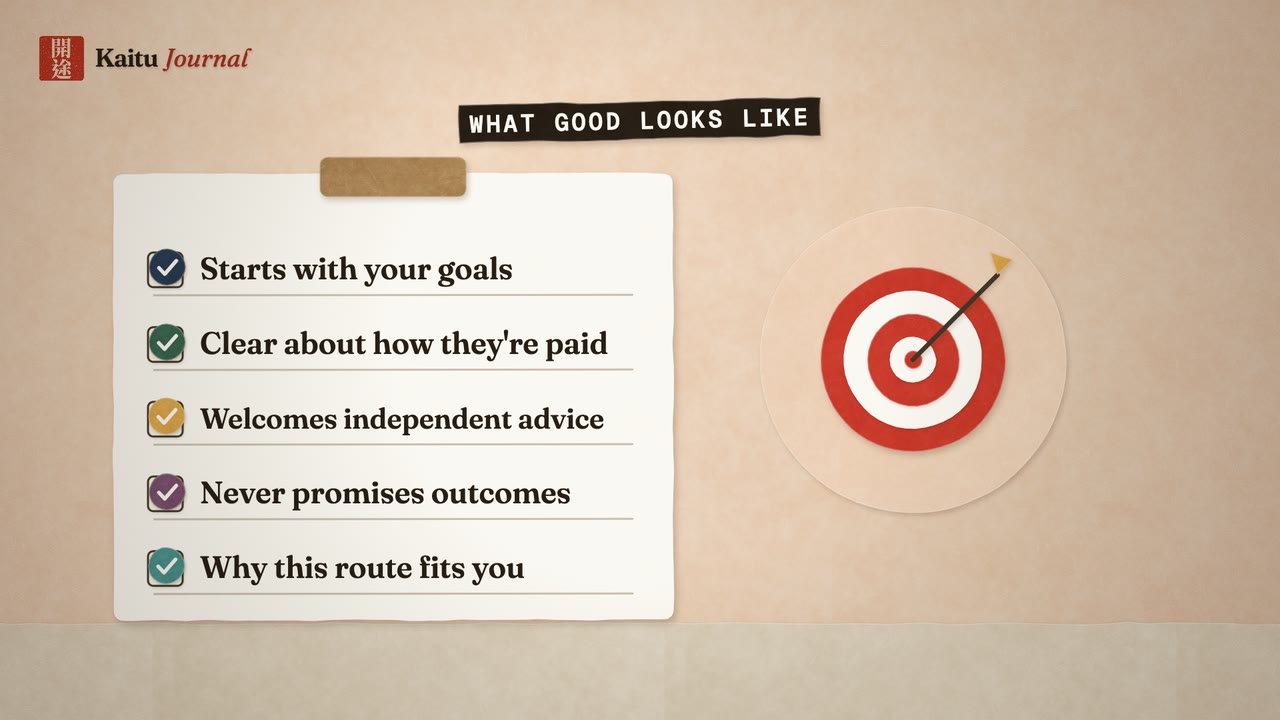
- They listen first. A good adviser wants to understand your family, goals and constraints before suggesting anything.
- They explain trade-offs. Every programme has strengths and drawbacks, and these should be set out plainly.
- They are open about conflicts. If an adviser has a relationship with a developer, fund or agent, they should say so.
- They know their limits. Tax, legal and financial questions often need specialists, and good advisers will tell you when to involve them.
- They take compliance seriously. A careful adviser will ask probing questions about your background and funds, because the government will.
- They communicate clearly. You should know what is happening at each stage, what is needed from you and what comes next.
Sensible checks before you engage
A little diligence on your adviser is time well spent:
- Look for a verifiable track record and a clear professional history.
- Check any authorisations or memberships the adviser claims, directly with the body concerned.
- Ask how they are paid, and by whom.
- Read the engagement terms carefully, including what happens if an application is refused or a programme changes.
- Speak to more than one firm before deciding.
Trust your instincts
If something feels wrong, it usually deserves a closer look. The right adviser will welcome careful questions and answer them patiently. Those who resist scrutiny are telling you something important.
How Kaitu helps
We work independently, explain every recommendation in writing and are open about how we are engaged. We would rather tell a family that a programme is not right for them than see them proceed on the wrong footing. To meet our team and ask your own questions, book a free consultation, or join one of our online events.