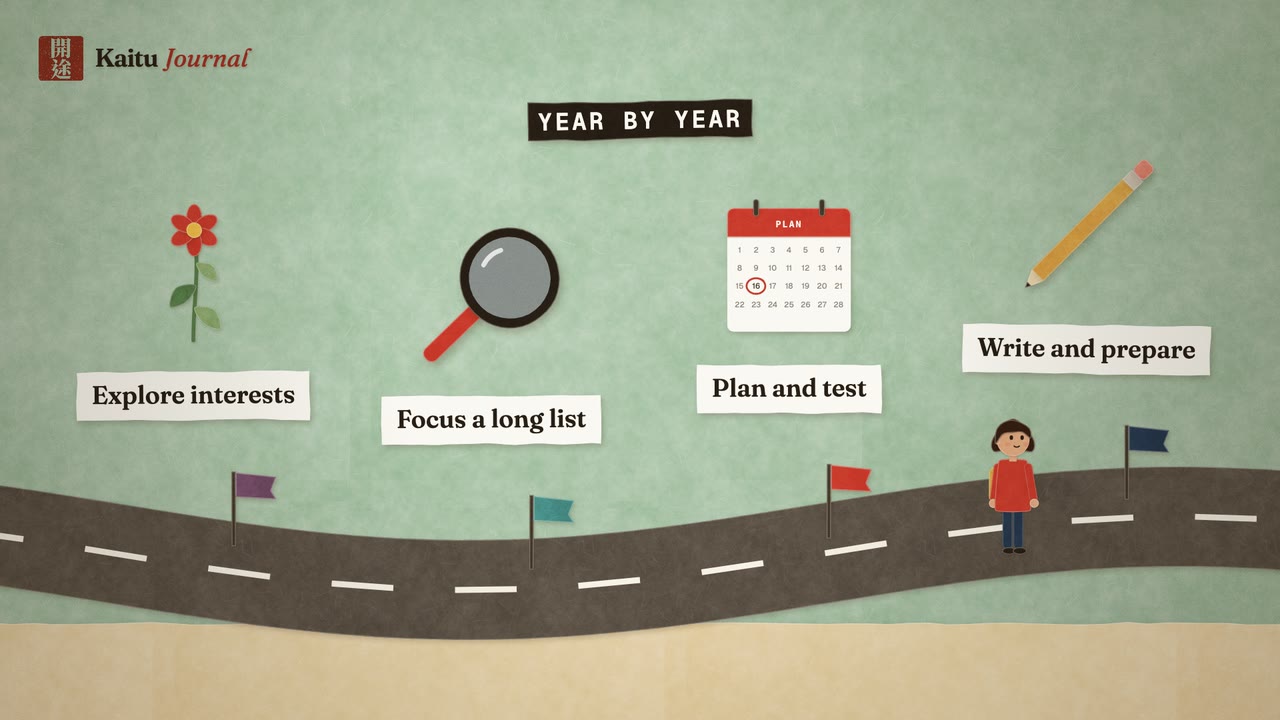
Most students begin a personal statement by staring at a blank page and trying to write an opening line. It rarely goes well. The problem is not the writing. It is that they have not yet worked out what they want to say. Before drafting anything, it helps to gather material, look at it honestly and decide what matters.
Start with an inventory
Set aside an hour and list everything that might be relevant, without judging it yet. Quantity matters more than quality at this stage. Useful headings include:
- Study — topics in class that held your attention, projects, essays you were proud of, questions that stayed with you.
- Reading and listening — books, articles, podcasts, lectures and documentaries connected to your subject.
- Experiences — work, volunteering, competitions, courses, travel, family responsibilities.
- Activities — clubs, sport, music, art, anything you return to by choice.
- Moments — specific occasions when you changed your mind, solved something, got something wrong or noticed something new.
The last heading is often the richest. Statements come alive in particular moments, not in general claims.
Look for depth, not range
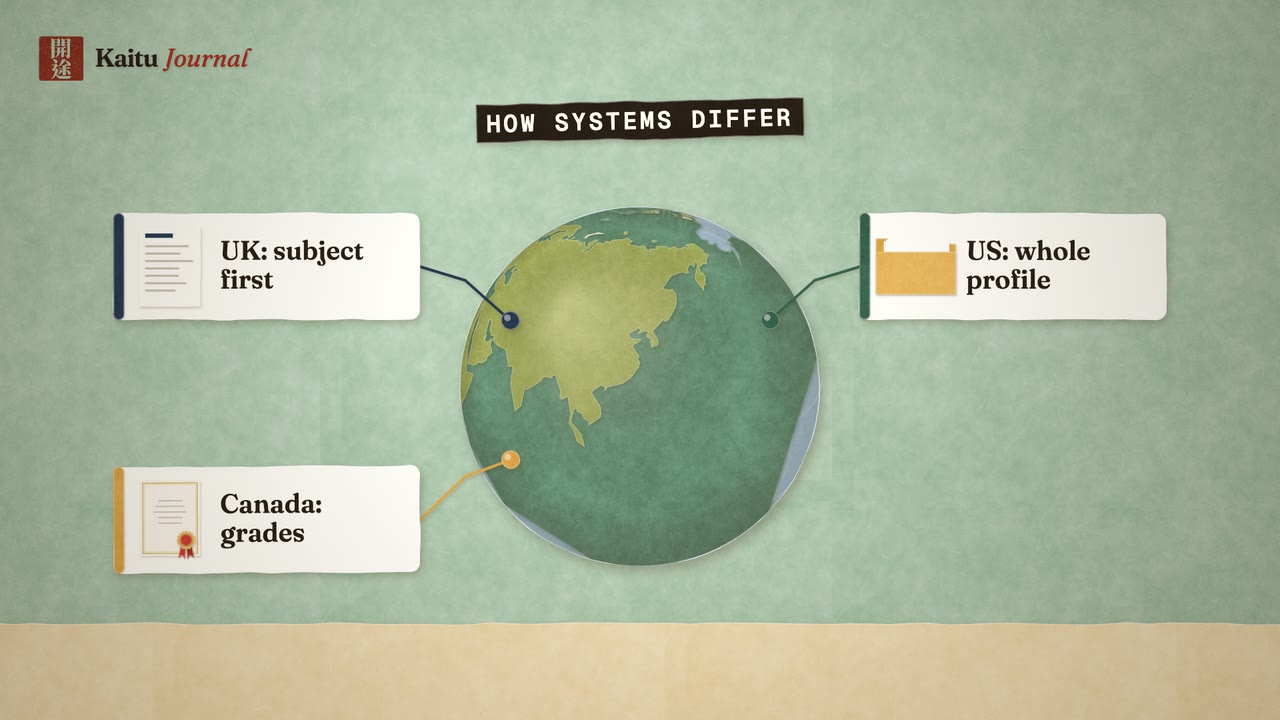
Once the list is long, look for items where you went further than you had to. Did you read a second book after the first? Follow a question beyond the syllabus? Return to a problem a week later? Depth of engagement is what admissions readers are looking for, particularly in subject-focused systems such as the UK.
A long list of achievements is less persuasive than two or three experiences explored with real thought. Most items on the inventory will not make it into the statement, and that is how it should be.
Ask what each item shows
For each promising item, write a sentence or two answering three questions:
- What did I actually do, read or notice?
- What did I think about it, and did my view change?
- What does it suggest about how I would approach university study?
If the answers are vague, the item may not be strong enough. If they are specific and interesting, you have found material.
Spot the connections
Look across the strongest items for threads. Perhaps an interest from a history lesson reappears in a book you chose and in a summer project. Perhaps a habit of asking how things work runs through very different activities. These connections often become the backbone of the statement, because they show a pattern of curiosity rather than a single episode.
For applications that ask about the person rather than the subject, such as many American essays, the same inventory works. The emphasis simply shifts towards values, relationships and moments of growth.
Keep it honest
The best material is true and specific. Students sometimes feel they need a dramatic story or an impressive title. Readers are far more interested in genuine thinking about ordinary experiences than in inflated accounts of unusual ones. If something did not really matter to you, leave it out.
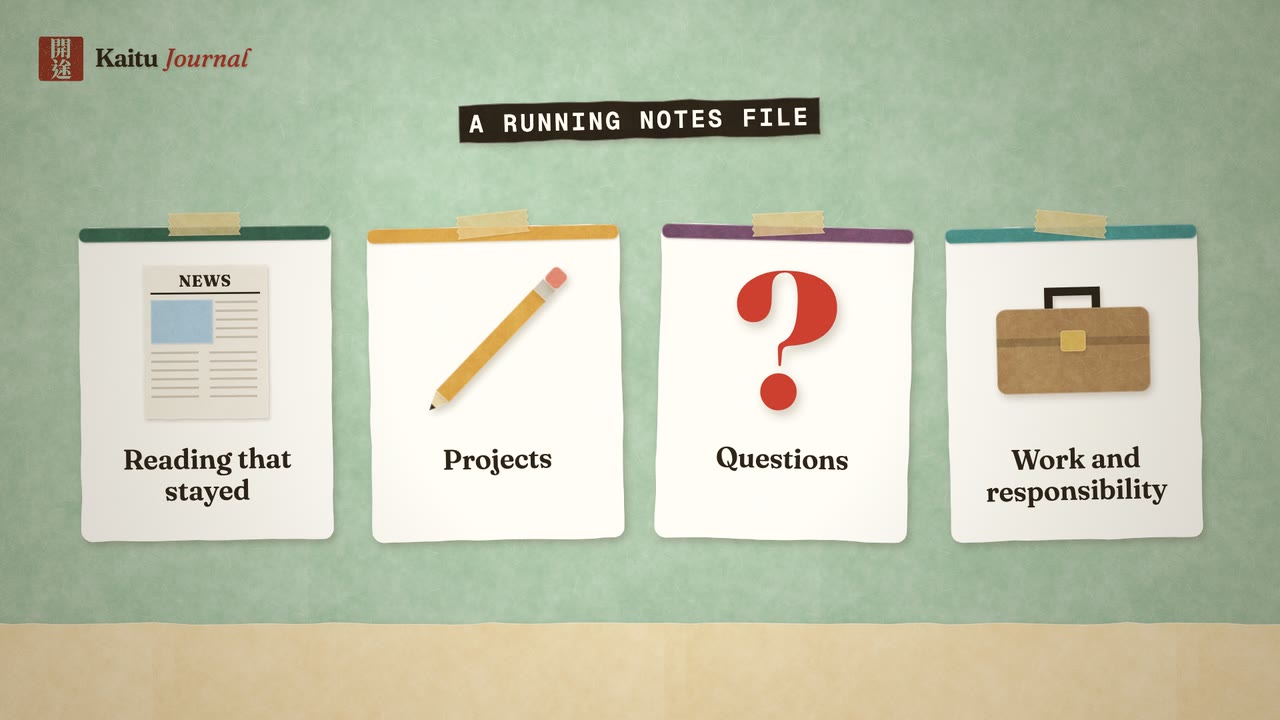
Keep a running file
The inventory should be a living document. Students who start it early in the year and add to it as they read and experience new things arrive at drafting time with far more to choose from. A short note after a lecture or a good book takes a minute and can provide a paragraph months later.
How Kaitu helps
Our consultants run inventory sessions with students, helping them recognise which experiences carry real weight before any drafting begins. Learn more about our admissions support or explore courses through the Kaitu Academy.