A birth certificate or degree that is perfectly valid at home can be politely refused abroad. Foreign authorities cannot easily check whether a stamp or signature from another country is genuine, so they rely on a chain of verification. Understanding that chain, and the order in which each step happens, saves a great deal of time and frustration.
Why documents need verifying at all
When an immigration office, university or registry receives a document from another country, it is being asked to trust an official it has never heard of. Authentication solves this by having a recognised authority confirm that the signature, seal or stamp on the document is real. It does not confirm that the contents are true; it confirms that the document was properly issued.
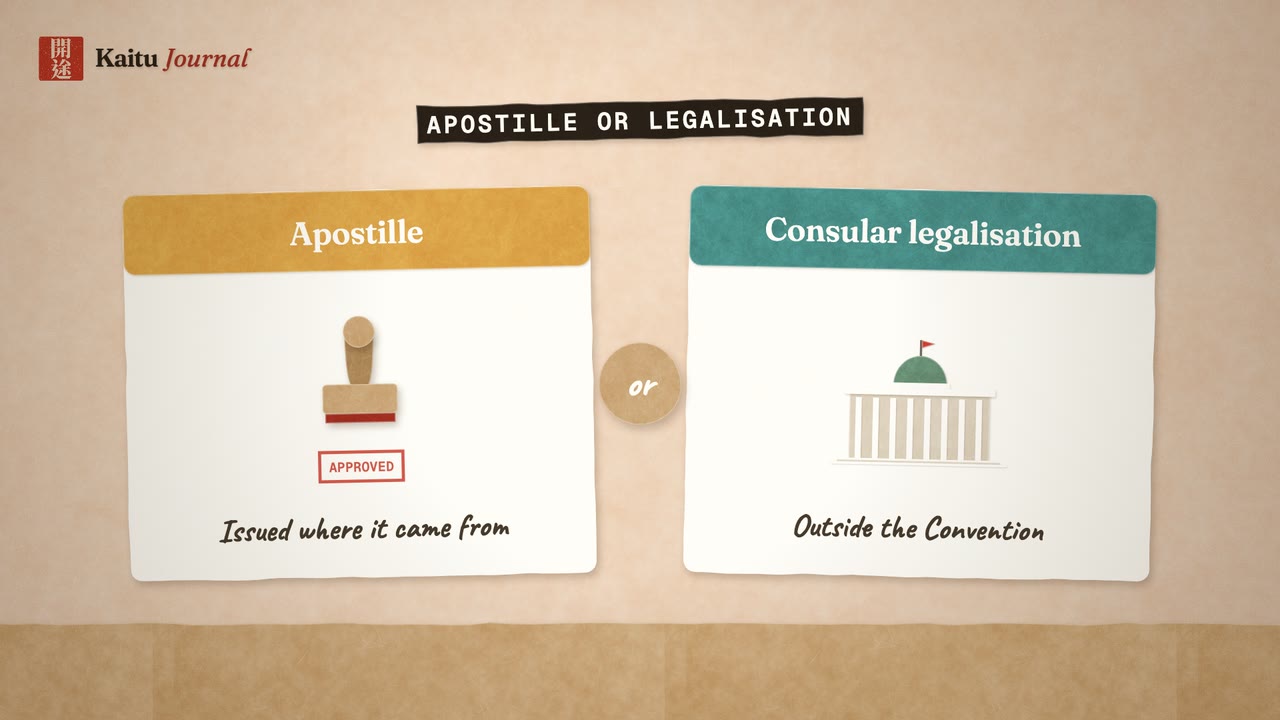
There are two main ways this happens, and which one applies depends on the countries involved.
The apostille
The Hague Apostille Convention created a simplified system between the countries that have joined it. A designated authority in the country that issued the document attaches a standard certificate, the apostille, which other member countries agree to accept without further checks.
A few points are worth knowing:
- The apostille is issued in the country where the document originated, not in the country where you will use it.
- Some documents must first be certified or registered locally before they can be apostilled, for example by a notary or the issuing office.
- Many countries now offer electronic apostilles, but not every receiving authority accepts them in the same way.
Consular legalisation
Where one of the countries is not part of the convention, the older route of legalisation usually applies. This is a chain of confirmations: typically the document is certified locally, then by a foreign ministry or equivalent, and finally by the embassy or consulate of the destination country.
Legalisation tends to take longer than an apostille and involves more offices, each with its own process. It is worth mapping out every step before you begin, as a mistake early in the chain can mean starting again.
Certified translations
Most authorities require documents in their own official language, or in a language they specify. A certified translation is one produced by a translator whose work the receiving authority recognises, usually with a signed statement of accuracy.
What counts as certified varies considerably. Some countries require a sworn translator registered in that country; others accept a translator's declaration, or a translation that has itself been notarised or apostilled. Before ordering anything, confirm:
- which languages are accepted;
- who is allowed to translate;
- whether the translation should be made from the original or from the apostilled version;
- whether the apostille itself needs translating.
The order matters. In many cases the original document is apostilled first and the whole package, apostille included, is then translated.
Validity windows
Some documents are treated as having a shelf life. Police certificates, medical reports, bank letters and civil status extracts are often accepted only if they were issued within a recent period, which each authority defines for itself. A document can therefore be perfectly authentic and still be rejected for being too old.
This creates a planning puzzle. Request time-sensitive documents too early and they expire before you submit; request them too late and processing delays leave you short. A practical approach is to:
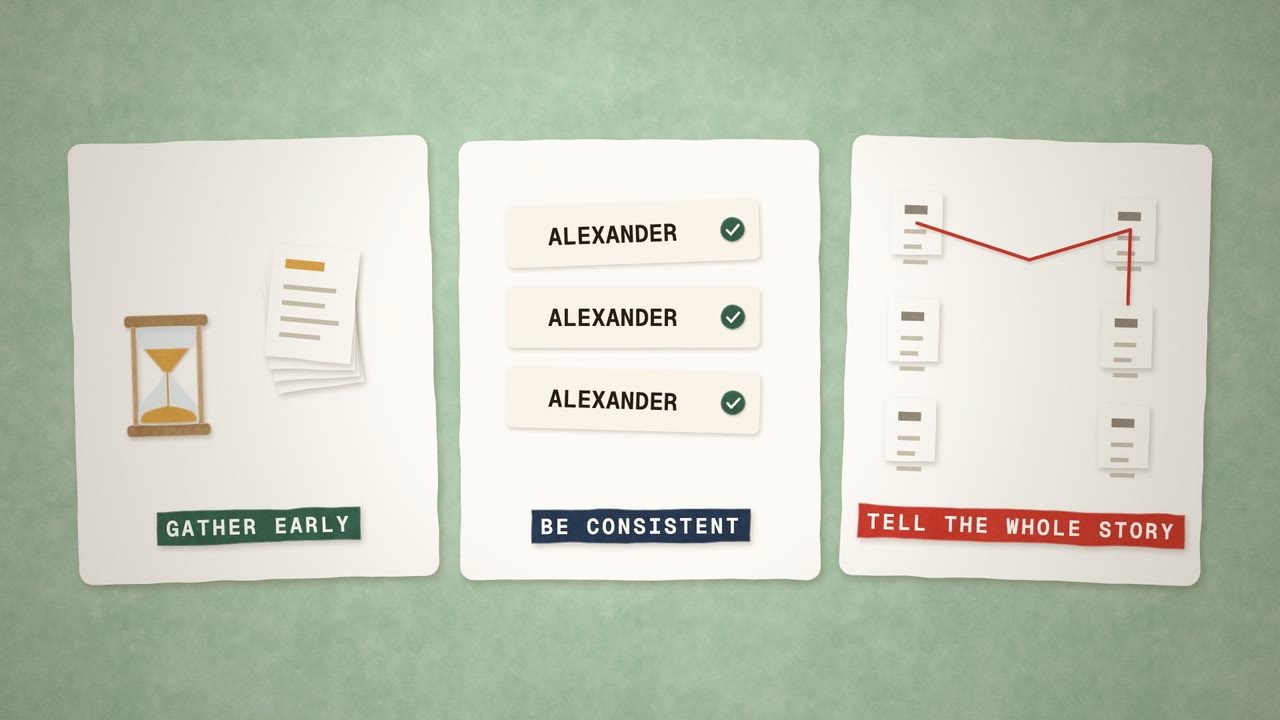
- gather long-lasting documents, such as degree certificates, well in advance;
- note which documents are time-sensitive for each application;
- work backwards from the submission date to decide when to order them.
Always check the current requirements of the specific authority you are dealing with, as rules change and different offices in the same country can interpret them differently.
How Kaitu can help
Our team maps out the authentication and translation steps for each document in your file, in the right order and on a realistic timetable, so that nothing expires before it is needed. To talk through your situation, book a free consultation, or browse our resources for further guides.