Families often ask how long a residency application will take, and the honest answer is that it depends. Published processing times describe only one stage, and they change. A realistic timeline accounts for everything that happens before submission and after approval, as well as the stages in between.
The stages that make up a timeline
Most residency by investment applications pass through a broadly similar sequence, although the order and detail differ by programme.
- Planning and selection. Clarifying goals, comparing programmes and agreeing on a route.
- Document gathering. Collecting civil documents, police certificates and financial records for every family member.
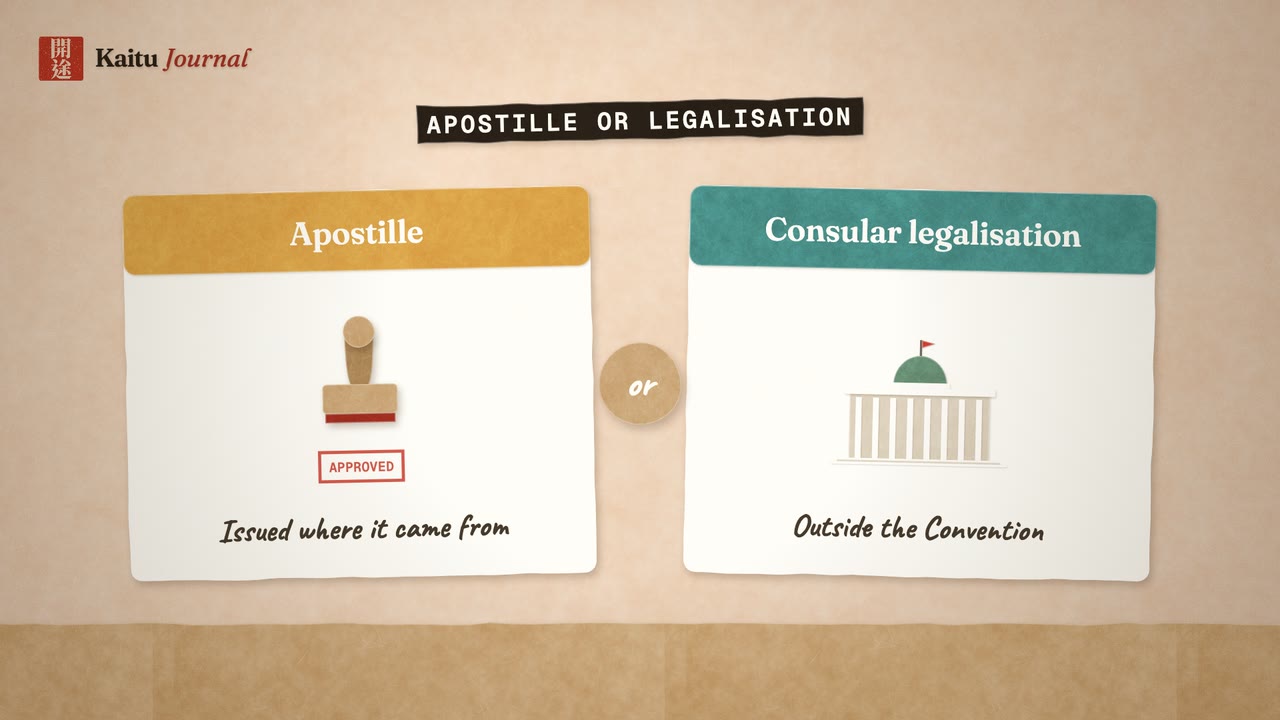
- Legalisation and translation. Having documents apostilled or legalised and translated into the required language.
- Making the investment. Identifying, verifying and completing the qualifying investment.
- Submission. Filing the application, sometimes with a visit for biometrics or an interview.
- Government review and due diligence. Background and source-of-funds checks, which applicants cannot speed up.
- Approval and issue. Receiving approval, then collecting permits or residence cards, sometimes in person.
Where time usually goes
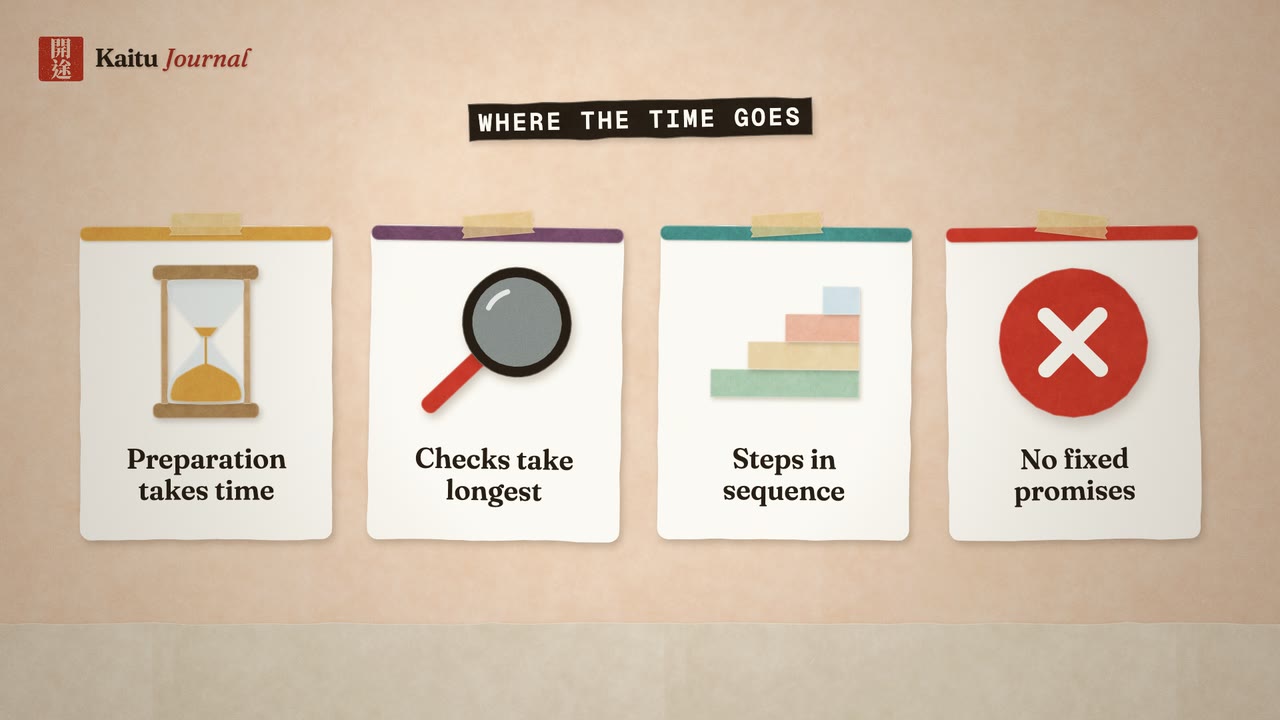
In our experience, the longest delays rarely come from the government review alone. More often they arise in preparation:
- Police certificates from abroad can take a surprisingly long time, particularly from countries where you no longer live.
- Legalisation chains sometimes involve several offices in sequence.
- Investment due diligence on a property, fund or business takes time if done properly, and should not be rushed.
- Banking steps, such as opening a local account or transferring funds through compliant channels, add their own checks.
- Expired documents may need to be obtained again if preparation runs long.
Factors outside your control
Some influences on the timeline cannot be planned away:
- Application volumes, which can rise sharply when a programme announces changes.
- Public holidays and administrative closures in the host country.
- Requests for further information during review.
- Changes to programme rules part-way through the process.
Because of these, it is wise to treat any published processing time as indicative only and to check the current official position at the outset.
Building in sensible margins
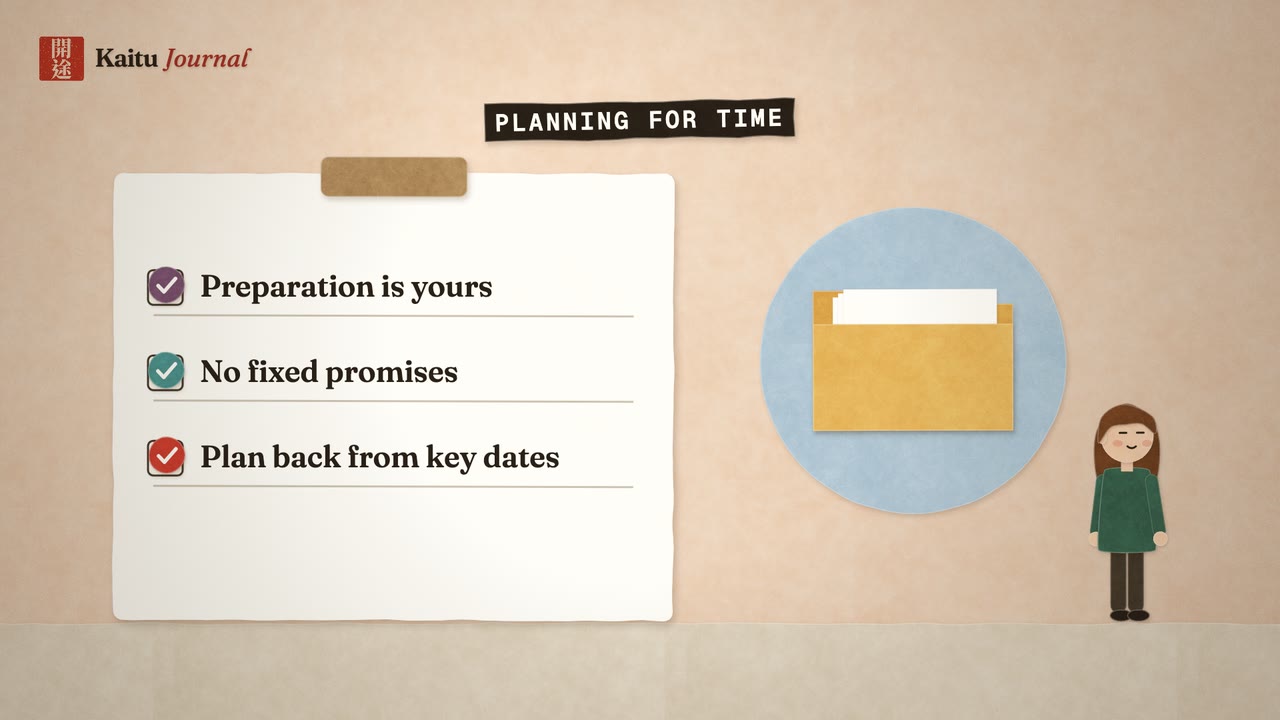
A realistic plan works backwards from the date you actually need status, such as the start of a school year or a planned move. From there:
- Start with the documents that take longest.
- Allow a buffer at each stage, especially for anything involving other countries.
- Check validity windows so documents remain current at submission.
- Agree in advance how the family will travel for any in-person steps.
- Keep a single, shared record of what has been done and what remains.
Planning after approval
The timeline does not end with approval. Collecting residence cards, registering an address, enrolling children in school and arranging healthcare all take time. If the permit has renewal or presence conditions, these should be diarised from the start so that nothing lapses.
Setting expectations at home
It helps to be open with everyone in the family about the likely sequence and the uncertainties. Children's schooling, a partner's work and parents' plans may all depend on the timeline. A plan that acknowledges uncertainty is far less stressful than one built on an optimistic guess.
How Kaitu helps
We build a stage-by-stage timeline for each family, starting with the slowest documents, and track every step in the client portal so you always know where things stand. To begin planning, book a free consultation, or read more in our residency guidance.