Once a student has gathered their material, the next decision is how to arrange it. Structure is easy to overlook, yet it is often the difference between an essay that reads smoothly and one that feels like a list. A reader moving through hundreds of applications will notice when an essay knows where it is going.
Start with the purpose
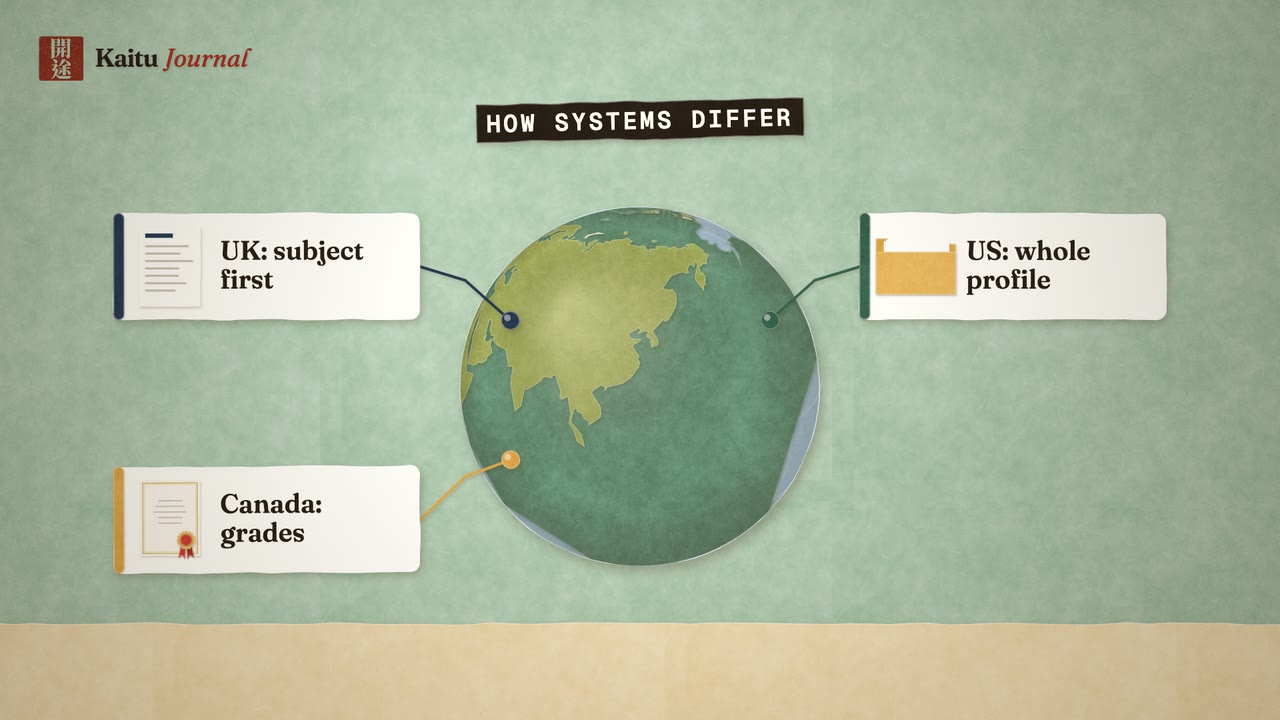
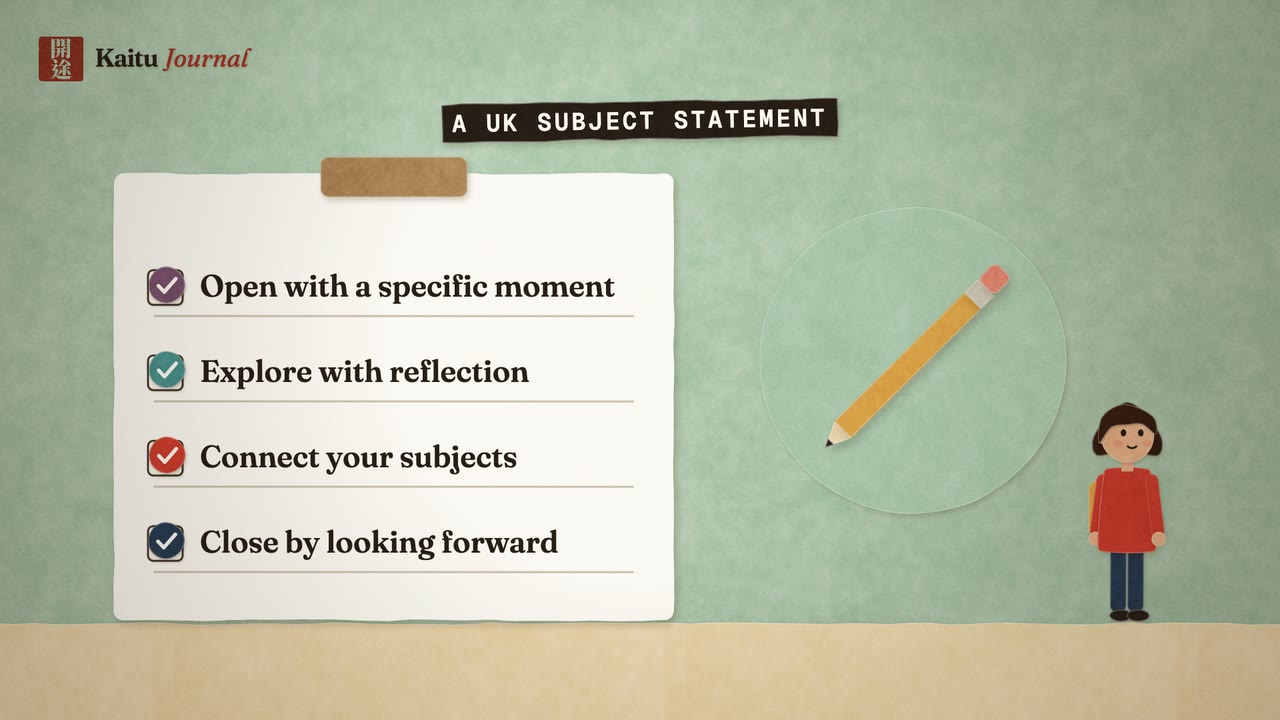
Before choosing a shape, be clear about the job the essay must do. A UK personal statement needs to show readiness and motivation for one subject. An American personal essay usually needs to reveal something about who the student is. A supplementary essay may answer a narrow question in a small number of words. The structure should serve that job, not the other way round.
Write a single sentence summarising what you want the reader to understand by the end. If you cannot, the material needs more thought before the structure does.
Shapes that tend to work
There is no single correct structure, but a few patterns appear again and again in strong essays.
The thread. A single interest or question runs through the essay, appearing in different settings: a lesson, a book, a project, a conversation. Each paragraph adds a new layer. This suits subject-focused statements particularly well.
The turning point. The essay builds towards a moment when the student's thinking changed, then reflects on what followed. It works best when the moment is specific and the reflection is honest rather than neatly resolved.
The zoom. The essay opens on a small, concrete detail and widens out to show what it reveals about the writer's interests or values. It can be effective for personal essays, provided the opening detail genuinely connects to the larger point.
The themed sections. For statements that must cover several things, such as academic interests, wider reading and relevant experience, a clear sequence of themes keeps everything organised. Each paragraph should still connect to the main purpose.
Openings and endings
Openings should bring the reader straight into the essay's subject. Grand quotations, dictionary definitions and sweeping statements about the importance of a field usually waste valuable space. A specific idea, observation or moment does far more.
Endings should not simply repeat the introduction. A good conclusion looks forward: what the student hopes to explore next, or how the thinking described in the essay will carry into university.
Paragraphs that earn their place
Within any structure, each paragraph should do one thing and connect to what comes before and after. A useful test:
- Can you summarise the paragraph in a few words?
- Does it add something new rather than restating an earlier point?
- Would the essay be weaker without it?
If a paragraph fails these tests, cut or combine it. Word limits are tight, and every sentence should be working.
Try more than one shape
Students often attach themselves to the first structure they try. It can be worth sketching two different outlines for the same material and comparing them. The same experiences can feel ordinary in one arrangement and compelling in another. An outline takes minutes to write and saves hours of redrafting.
Read it as a stranger
Once a draft exists, read it aloud, or ask someone unfamiliar with the student to read it. Where does their attention drift? Where are they confused? Structure problems are much easier to see from the outside.
How Kaitu helps
Our consultants help students choose and test structures before redrafting begins, so the essay develops in the right direction from the start. Find out more about our admissions service or book a free consultation.