Residence routes for founders and their first staff

A company abroad usually needs people on the ground. A general guide to how founder, investor and employee immigration routes tend to work, and how to plan them alongside the business.

Kaitu Editorial17 June 2026 · 4 min read
Papercraft figures carrying folded paper suitcases towards a small paper office building

Registering a company in another country does not, on its own, give anyone the right to live or work there. Founders are often surprised by this. The business and the people who run it are treated separately, and the immigration side usually takes longer to plan than the company itself. This guide sets out, in general terms, how the routes for founders and early staff tend to work.

Start with who needs to be there

Before looking at any visa category, decide who genuinely needs to be physically present, and for how long. The answer is often smaller than founders first assume.

  • Founders who will relocate and run the business from the new country.
  • Founders who will visit for meetings, set-up work and board duties, but live elsewhere.
  • Early hires brought in from abroad because they hold skills or knowledge the company needs.
  • Local hires, who already have the right to work and need no sponsorship.

Each group usually falls under a different set of rules, and short business visits are normally treated quite differently from living and working in a country.

The common route types for founders

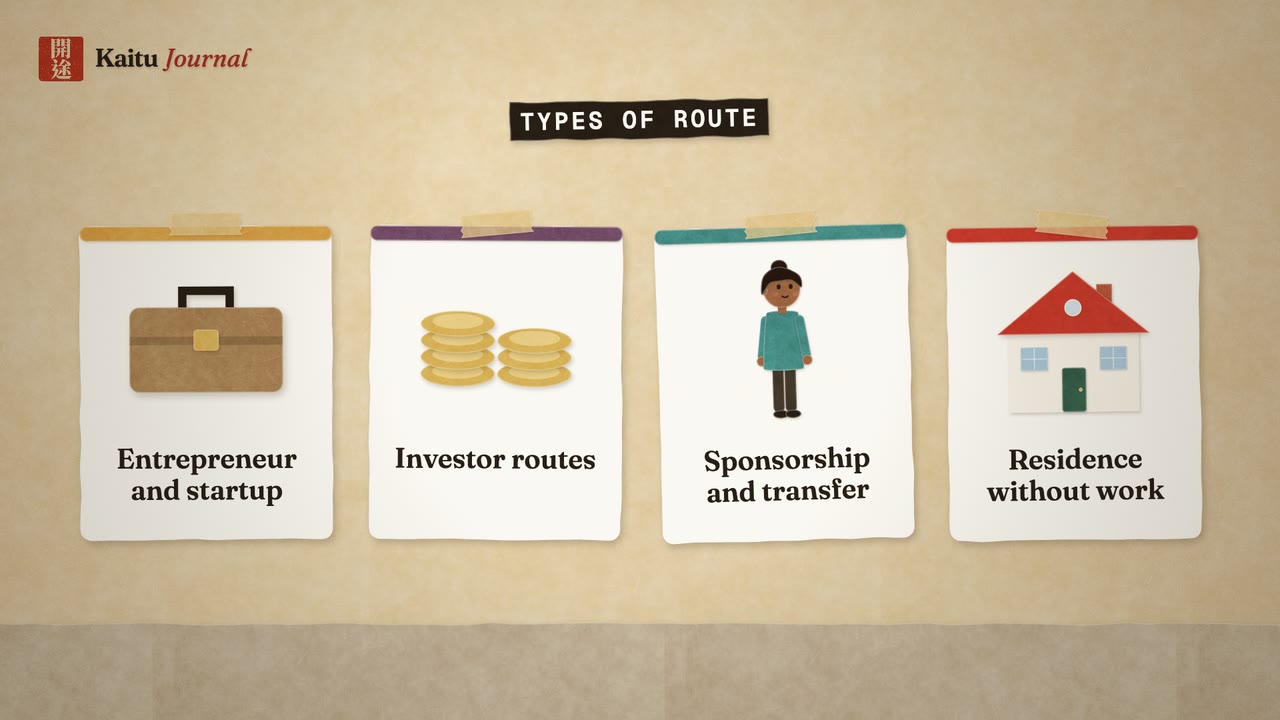
Most countries offer some combination of the following, though the names, conditions and thresholds vary widely:

  • Entrepreneur or start-up routes, which typically look at the business plan, its viability and sometimes endorsement by an approved body.
  • Investor routes, where the applicant commits capital to a business or to the economy in a defined way.
  • Self-employment or business-owner routes, for people running their own established company.
  • Intra-company transfer routes, for senior people moving from an existing business abroad into a new branch or subsidiary.

Some routes lead in time towards long-term residence, and some do not. That difference matters a great deal for founders who expect to stay.

Routes for the first staff

Bringing early employees from abroad usually depends on the company itself being able to sponsor them. In many countries this means the business must first be registered, trading and sometimes licensed as a sponsor before it can hire from overseas. Common features include:

  • A genuine job offer at an appropriate skill level.
  • Salary or contract conditions set by the immigration authorities.
  • Checks that the role could not easily be filled locally, in some systems.

This is one reason the order of events matters. A company that wants to bring people in quickly may need to plan its sponsorship status from the outset.

Families come too

A founder who relocates rarely moves alone. Dependant rules for partners and children differ between routes, including whether a partner may work and how schooling is arranged. Plan the family's position at the same time as the founder's, not afterwards.

Plan the company and the visa together

The structure of the business and the immigration route are closely linked. A branch, a subsidiary or a newly formed company can each open or close particular routes. Shareholdings, the founder's role and the source of the investment can all affect eligibility. Getting these aligned before registration is far easier than changing them later.

Immigration rules change regularly, so treat any general guide, including this one, as a starting point. Specific eligibility should always be confirmed with licensed immigration advisers in the country concerned.

Where Kaitu helps

We help founders map who needs to be where, plan company structure and residence together, and coordinate with licensed local professionals for the legal work. Our free Academy course on the first decisions of a company abroad covers this in more depth. To talk through your own plans, book a free consultation or explore Kaitu Academy.

Keep reading

More from the Kaitu Journal.

Guides

Five steps, one road: how a Kaitu plan works

From a first, free conversation to your first day abroad — and every goal after it. Scroll the road to see how a Kaitu plan unfolds, step by step.

Kaitu Editorial · · 3 min read
Guides

Getting the most from a first consultation

A little preparation turns a first consultation from a general conversation into a practical plan. Here is what to gather and what to think through beforehand.

Kaitu Editorial · · 3 min read
Talk it through with us

A free, private consultation with a senior Kaitu consultant — no obligation.

Book a free consultation

Most read

Guides

Five steps, one road: how a Kaitu plan works

From a first, free conversation to your first day abroad — and every goal after it. Scroll the road to see how a Kaitu plan unfolds, step by step.

Kaitu Editorial · · 3 min read
Citizenship

Red flags when choosing an investment migration adviser

The adviser you choose shapes the whole experience, from programme selection to due diligence. The warning signs to look out for, and what good professionals do instead.

Kaitu Editorial · · 3 min read
Citizenship

Dual citizenship: why your home country's rules come first

Gaining a second nationality can, in some cases, cost you your first. Why checking your home country's position should come before anything else, and the other checks worth making early.

Kaitu Editorial · · 3 min read
News

Introducing Kaitu language exchanges

Kaitu now hosts language exchanges, online and in person, where people practise a language with others who are heading the other way.

Kaitu Editorial · · 3 min read

Editors’ picks

News

Kaitu's new events season

A new season of Kaitu events is open for booking, from online webinars and language exchanges to in-person evenings that are also broadcast online. Here is what to expect and how joining works.

Kaitu Editorial · · 3 min read
Company

Introducing the Kaitu Journal

A home for our news, practical guides and honest perspective on studying, living and building a life abroad.

Kaitu Editorial · · 2 min read

In depth

Guides & explainers

Citizenship

The due-diligence process, explained

Why governments look so closely at every applicant — and how good preparation turns a stressful stage into a straightforward one.

Kaitu Editorial · · 2 min read

Also in the Journal

Admissions

UCAS and the Common App, compared

British and American universities ask for very different things. Understanding how each system reads an applicant makes applying to both far more manageable.

Kaitu Editorial · · 4 min read
Admissions

Finding the material for your personal statement

Strong statements are built from good material, not clever sentences. A simple inventory of experiences, reading and moments helps students find what is worth saying.

Kaitu Editorial · · 3 min read

You may have missed

Admissions

Campus visits: what to look for and what to ask

A good visit tells you things no prospectus can. Here is how to plan one, who to speak to and which questions are worth asking.

Kaitu Editorial · · 4 min read

From the Journal

Admissions

Planning the testing year

English-language tests and entrance exams can crowd an already busy year. A clear testing plan keeps scores, deadlines and schoolwork in balance.

Kaitu Editorial · · 3 min read
Stay on the road

New articles, in your inbox.

Occasional letters with our latest guides and news. No noise, unsubscribe any time.

Kaitu Journal

The Kaitu Journal is part of Kaitu. Sponsored articles and advertisements are always labelled.