Keeping a document tracker for a complex move

A relocation can involve dozens of documents, each with its own status and expiry date. A simple tracker and a sensible storage system keep everything under control.

Kaitu Editorial2 May 2026 · 4 min read
A papercraft filing cabinet with neatly labelled folders and a checklist pinned to the front

A family move can easily involve several dozen documents, spread across multiple people, countries and authorities. Some are being requested, some are with a translator, some are waiting for an apostille and some are about to expire. Without a clear system it becomes difficult to know what is ready and what is holding things up. A tracker does not need to be sophisticated; it needs to be consistent.

What a good tracker records

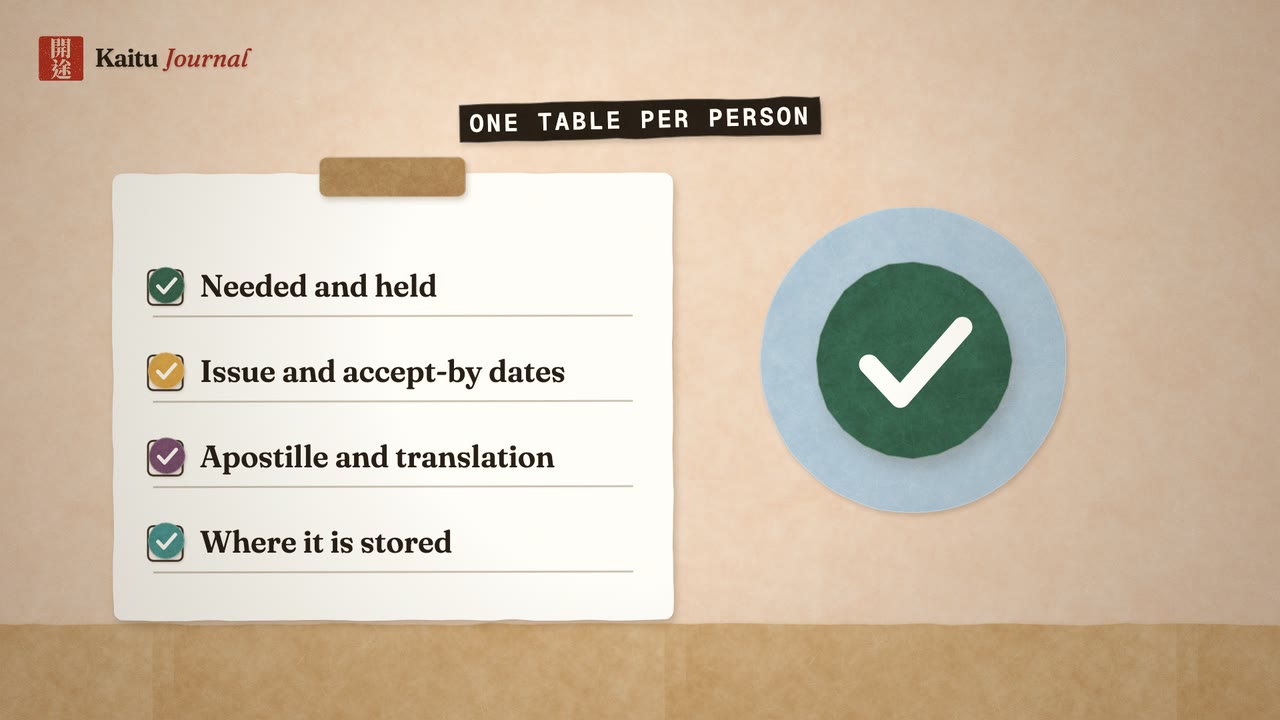
One row per document per person works well. For each, record:

  • Person: whose document it is.
  • Document: its precise name, such as a long-form birth certificate rather than simply a birth certificate.
  • Purpose: which application or step it supports.
  • Issuing authority and country.
  • Issue date and expiry or validity date.
  • Status: for example, needed, requested, received, authenticated, translated, submitted.
  • Format required: original, certified copy, apostilled, translated, digital.
  • Location: where the original is kept and where the scan is saved.
  • Notes: reference numbers, contacts, anything unusual.

A spreadsheet is perfectly adequate. The value comes from keeping it up to date, not from the tool.

Status and dates

The two columns that matter most are status and dates. Status tells you what needs doing next; dates tell you when.

Time-sensitive documents, such as police certificates, medical reports and recent bank letters, are the ones most likely to cause trouble. Highlight them, and add a reminder well before each validity window closes. Equally, note passports approaching their expiry, as many processes expect substantial remaining validity.

A weekly review, even a brief one, keeps the tracker honest. Move anything that has progressed, chase anything that has stalled, and check the upcoming dates.

Naming and storing digital copies

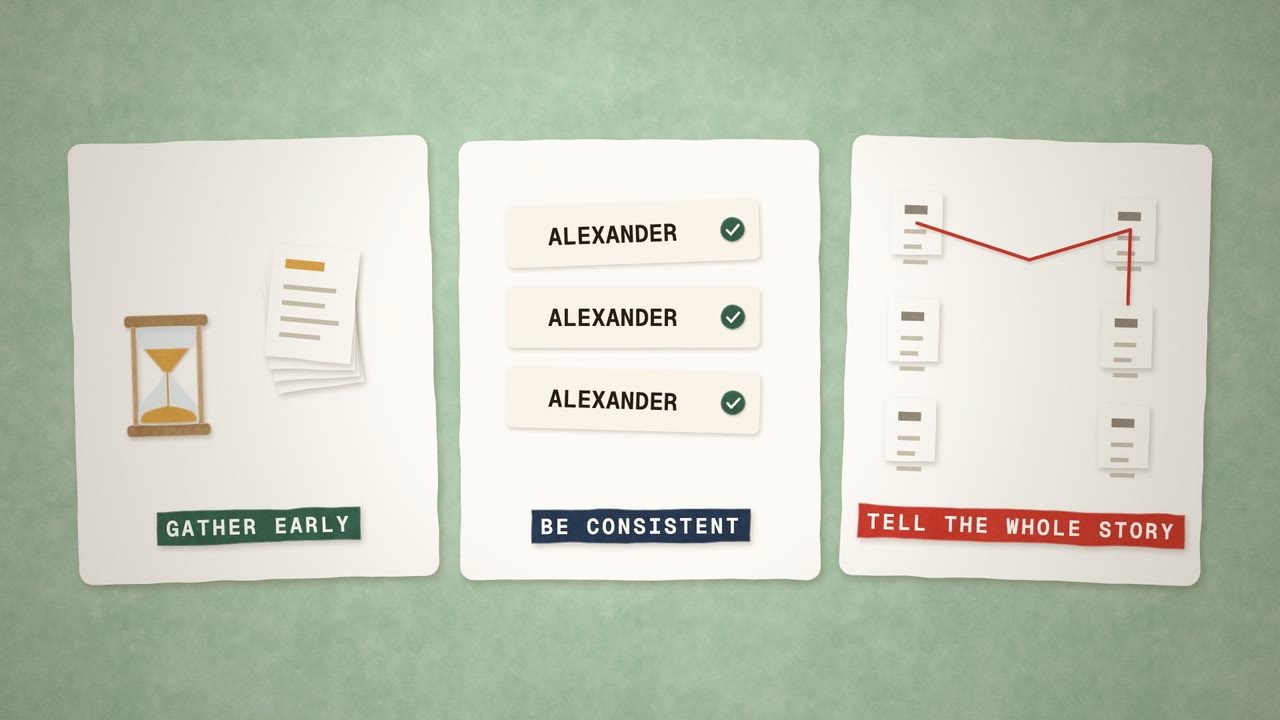
Scan every document, front and back, in good resolution and in colour. Use a consistent file naming pattern so that anyone can find what they need, for instance the person's name, the document type and the issue date in the same order every time.

Keep the files in a single structured location, with a folder per person and subfolders for each type of document. Store the authenticated and translated versions alongside the originals, clearly labelled, so it is obvious which version has been prepared for which authority.

Keeping it secure

These files contain exactly the information that identity thieves look for, so treat them carefully:

  • Use a secure, encrypted storage service with strong, unique passwords and two-step verification.
  • Avoid sending documents by ordinary email where a secure upload is available.
  • Share access only with people who need it, and remove access once they no longer do.
  • Keep a second, offline backup in case an account becomes inaccessible.

Looking after the originals

Physical originals deserve the same care. Keep them together in a single folder or document wallet, protected from damage, and know where it is at all times. When travelling, carry the originals you may need on arrival in your hand luggage rather than in shipped belongings.

When you send originals to an authority, note the date, the method and any tracking reference in your tracker, and record when you expect them back.

Sharing the work within a family

In a family move, it helps to name one person as the keeper of the tracker, even if several people gather documents. Others can update their own rows, but one person keeps an overview and runs the weekly review.

How Kaitu can help

Kaitu clients track every document in their secure portal, where each one is linked to the step it supports and its key dates are monitored for them. To find out more, book a free consultation or visit our resources.
Keep reading

More from the Kaitu Journal.

Guides

Five steps, one road: how a Kaitu plan works

From a first, free conversation to your first day abroad — and every goal after it. Scroll the road to see how a Kaitu plan unfolds, step by step.

Kaitu Editorial · · 3 min read
Guides

Getting the most from a first consultation

A little preparation turns a first consultation from a general conversation into a practical plan. Here is what to gather and what to think through beforehand.

Kaitu Editorial · · 3 min read
Talk it through with us

A free, private consultation with a senior Kaitu consultant — no obligation.

Book a free consultation

Most read

Guides

Five steps, one road: how a Kaitu plan works

From a first, free conversation to your first day abroad — and every goal after it. Scroll the road to see how a Kaitu plan unfolds, step by step.

Kaitu Editorial · · 3 min read
Citizenship

Red flags when choosing an investment migration adviser

The adviser you choose shapes the whole experience, from programme selection to due diligence. The warning signs to look out for, and what good professionals do instead.

Kaitu Editorial · · 3 min read
Citizenship

Dual citizenship: why your home country's rules come first

Gaining a second nationality can, in some cases, cost you your first. Why checking your home country's position should come before anything else, and the other checks worth making early.

Kaitu Editorial · · 3 min read
News

Introducing Kaitu language exchanges

Kaitu now hosts language exchanges, online and in person, where people practise a language with others who are heading the other way.

Kaitu Editorial · · 3 min read

Editors’ picks

News

Kaitu's new events season

A new season of Kaitu events is open for booking, from online webinars and language exchanges to in-person evenings that are also broadcast online. Here is what to expect and how joining works.

Kaitu Editorial · · 3 min read
Company

Introducing the Kaitu Journal

A home for our news, practical guides and honest perspective on studying, living and building a life abroad.

Kaitu Editorial · · 2 min read

In depth

Guides & explainers

Citizenship

The due-diligence process, explained

Why governments look so closely at every applicant — and how good preparation turns a stressful stage into a straightforward one.

Kaitu Editorial · · 2 min read

Also in the Journal

Admissions

UCAS and the Common App, compared

British and American universities ask for very different things. Understanding how each system reads an applicant makes applying to both far more manageable.

Kaitu Editorial · · 4 min read
Admissions

Finding the material for your personal statement

Strong statements are built from good material, not clever sentences. A simple inventory of experiences, reading and moments helps students find what is worth saying.

Kaitu Editorial · · 3 min read

You may have missed

Admissions

Campus visits: what to look for and what to ask

A good visit tells you things no prospectus can. Here is how to plan one, who to speak to and which questions are worth asking.

Kaitu Editorial · · 4 min read

From the Journal

Admissions

Planning the testing year

English-language tests and entrance exams can crowd an already busy year. A clear testing plan keeps scores, deadlines and schoolwork in balance.

Kaitu Editorial · · 3 min read
Stay on the road

New articles, in your inbox.

Occasional letters with our latest guides and news. No noise, unsubscribe any time.

Kaitu Journal

The Kaitu Journal is part of Kaitu. Sponsored articles and advertisements are always labelled.