Job interviews across cultures

Interviews follow unwritten rules, and those rules change from one country to the next. Preparing for different styles and expectations helps your experience come across as it should.

Kaitu Editorial9 July 2026 · 3 min read
Two papercraft figures shaking hands across a small table, with speech bubbles above them

Strong candidates sometimes struggle in interviews abroad not because of their experience, but because they are playing by a different set of rules. How formally to speak, how much to talk about yourself, how directly to answer and how to follow up can all vary. A little preparation helps your abilities come across clearly.

Understand the process

Interview processes differ in length and structure. Some employers hold a single conversation; others run several rounds involving screening calls, technical tests, case studies, panel interviews and meetings with future colleagues. Some processes move quickly, while others take a considerable time and involve consensus among many people.

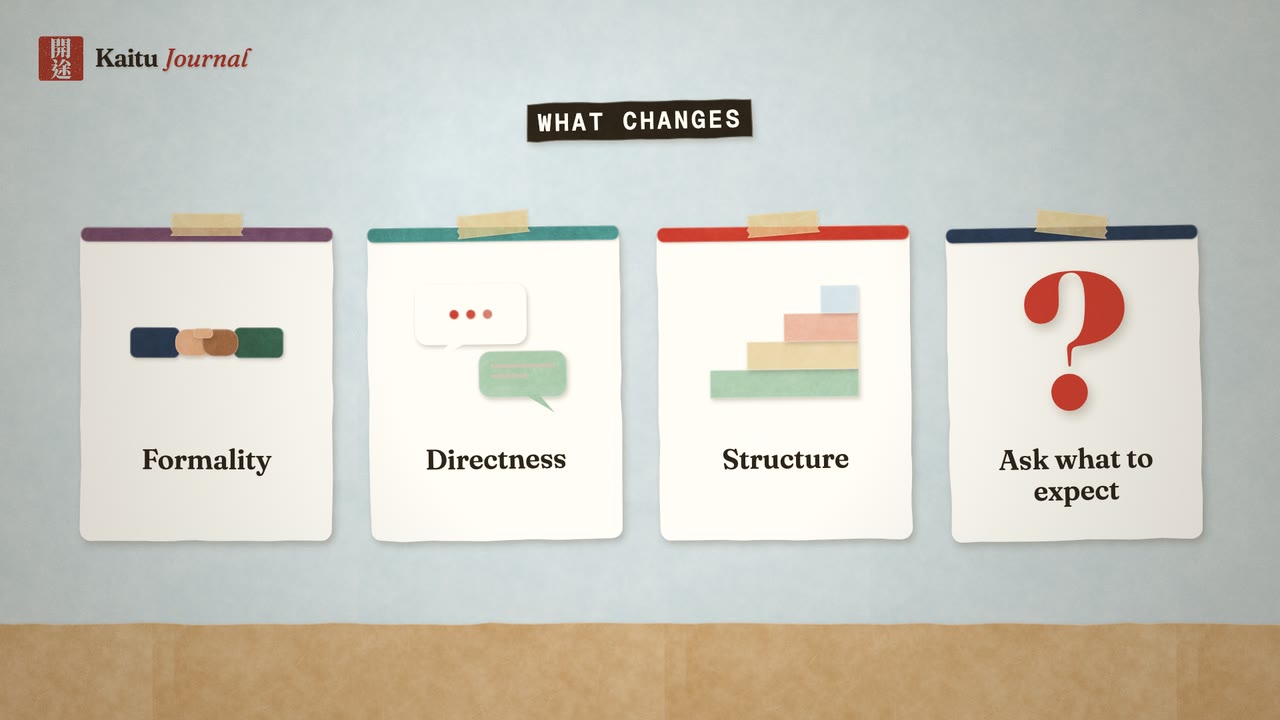
Ask the recruiter or HR contact what to expect at each stage, who you will meet and roughly how long it will take. This is a normal request almost everywhere, and the answer tells you how to prepare.

Formality and first impressions

Expectations around formality cover greetings, how you address interviewers, dress and punctuality. In some cultures titles and surnames are used until you are invited to do otherwise; in others first names are normal from the outset. Dress codes can range from formal business wear to deliberately casual, depending on the country and the sector.

Punctuality is valued nearly everywhere, but what it means in practice can differ. Arriving a little early, or joining a video call a few minutes ahead, is a safe default.

Talking about yourself

Cultures vary in how comfortable they are with self-promotion. In some markets interviewers expect you to describe your achievements confidently and in the first person. In others, emphasising team contributions and speaking modestly is better received, and overt self-promotion can seem out of place.

A balanced approach works in most settings: describe specific situations, what you personally did and what the result was. Structured methods for answering behavioural questions, which walk through the situation, your task, your action and the outcome, are widely recognised.

Directness and communication style

Some cultures value direct, concise answers and are comfortable with disagreement. Others communicate more indirectly, reading meaning from context and tone. Silence can signal thoughtfulness in one setting and uncertainty in another.

If you are unsure, listen carefully to how your interviewers speak and mirror their pace and level of directness. It is also perfectly acceptable to ask for clarification if a question is unclear, especially when interviewing in a second language.

Topics to handle with care

Depending on local law and custom, interviewers may or may not ask about personal circumstances such as age, family plans or nationality. Know in advance how you would like to respond. Discussions about pay and conditions are also handled differently, with some cultures raising them early and others leaving them until an offer is made.

Be ready to explain your right to work, your relocation plans and your realistic start date clearly and calmly. Employers hiring internationally often weigh these as heavily as experience.

Video and remote interviews

Many international interviews take place online. Test your technology, choose a quiet and tidy setting, and check the time zone carefully. Look at the camera when speaking, and keep notes discreet.

Following up

Thank-you messages are expected in some markets and less common in others. A short, polite note after the interview is rarely out of place. Keep it brief and professional.

How Kaitu can help

Our careers team runs interview preparation tailored to specific countries and sectors, including practice sessions. To learn more, explore our careers services or book a free consultation.
Keep reading

More from the Kaitu Journal.

Guides

Five steps, one road: how a Kaitu plan works

From a first, free conversation to your first day abroad — and every goal after it. Scroll the road to see how a Kaitu plan unfolds, step by step.

Kaitu Editorial · · 3 min read
Guides

Getting the most from a first consultation

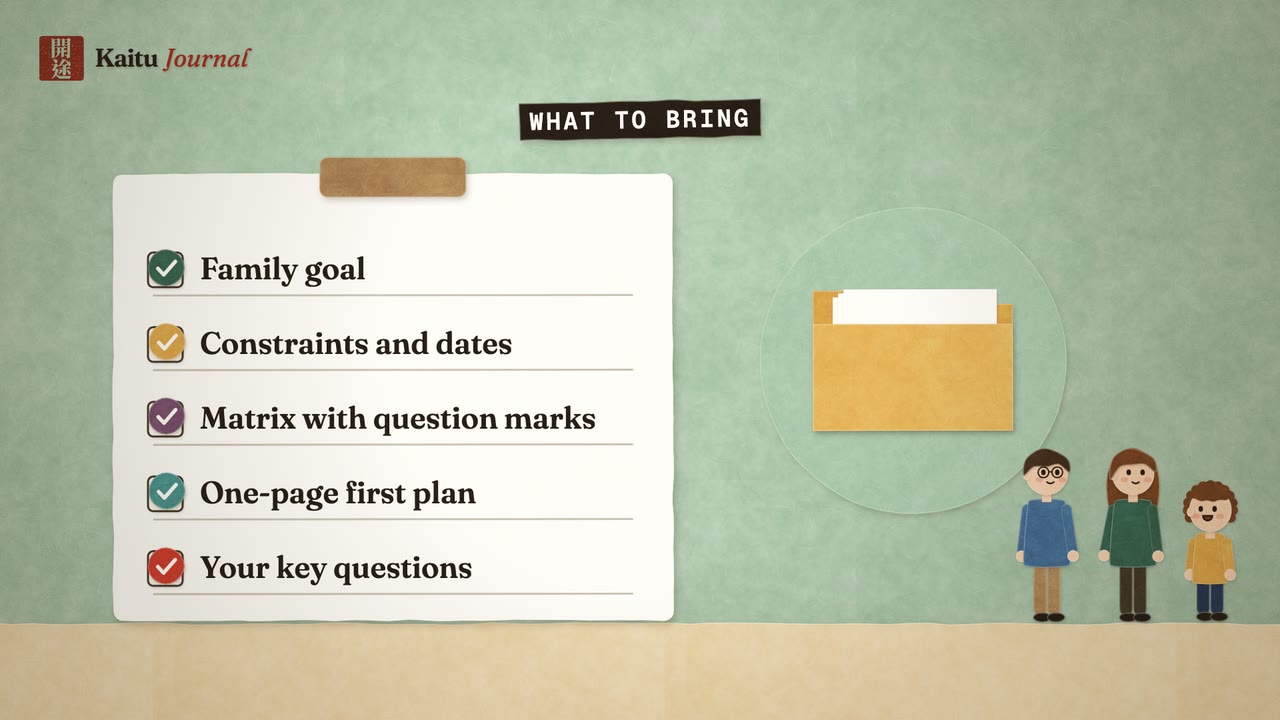
A little preparation turns a first consultation from a general conversation into a practical plan. Here is what to gather and what to think through beforehand.

Kaitu Editorial · · 3 min read
Talk it through with us

A free, private consultation with a senior Kaitu consultant — no obligation.

Book a free consultation

Most read

Guides

Five steps, one road: how a Kaitu plan works

From a first, free conversation to your first day abroad — and every goal after it. Scroll the road to see how a Kaitu plan unfolds, step by step.

Kaitu Editorial · · 3 min read
Citizenship

Red flags when choosing an investment migration adviser

The adviser you choose shapes the whole experience, from programme selection to due diligence. The warning signs to look out for, and what good professionals do instead.

Kaitu Editorial · · 3 min read
Citizenship

Dual citizenship: why your home country's rules come first

Gaining a second nationality can, in some cases, cost you your first. Why checking your home country's position should come before anything else, and the other checks worth making early.

Kaitu Editorial · · 3 min read
News

Introducing Kaitu language exchanges

Kaitu now hosts language exchanges, online and in person, where people practise a language with others who are heading the other way.

Kaitu Editorial · · 3 min read

Editors’ picks

News

Kaitu's new events season

A new season of Kaitu events is open for booking, from online webinars and language exchanges to in-person evenings that are also broadcast online. Here is what to expect and how joining works.

Kaitu Editorial · · 3 min read
Company

Introducing the Kaitu Journal

A home for our news, practical guides and honest perspective on studying, living and building a life abroad.

Kaitu Editorial · · 2 min read

In depth

Guides & explainers

Citizenship

The due-diligence process, explained

Why governments look so closely at every applicant — and how good preparation turns a stressful stage into a straightforward one.

Kaitu Editorial · · 2 min read

Also in the Journal

Admissions

UCAS and the Common App, compared

British and American universities ask for very different things. Understanding how each system reads an applicant makes applying to both far more manageable.

Kaitu Editorial · · 4 min read
Admissions

Finding the material for your personal statement

Strong statements are built from good material, not clever sentences. A simple inventory of experiences, reading and moments helps students find what is worth saying.

Kaitu Editorial · · 3 min read

You may have missed

Admissions

Campus visits: what to look for and what to ask

A good visit tells you things no prospectus can. Here is how to plan one, who to speak to and which questions are worth asking.

Kaitu Editorial · · 4 min read

From the Journal

Admissions

Planning the testing year

English-language tests and entrance exams can crowd an already busy year. A clear testing plan keeps scores, deadlines and schoolwork in balance.

Kaitu Editorial · · 3 min read
Stay on the road

New articles, in your inbox.

Occasional letters with our latest guides and news. No noise, unsubscribe any time.

Kaitu Journal

The Kaitu Journal is part of Kaitu. Sponsored articles and advertisements are always labelled.