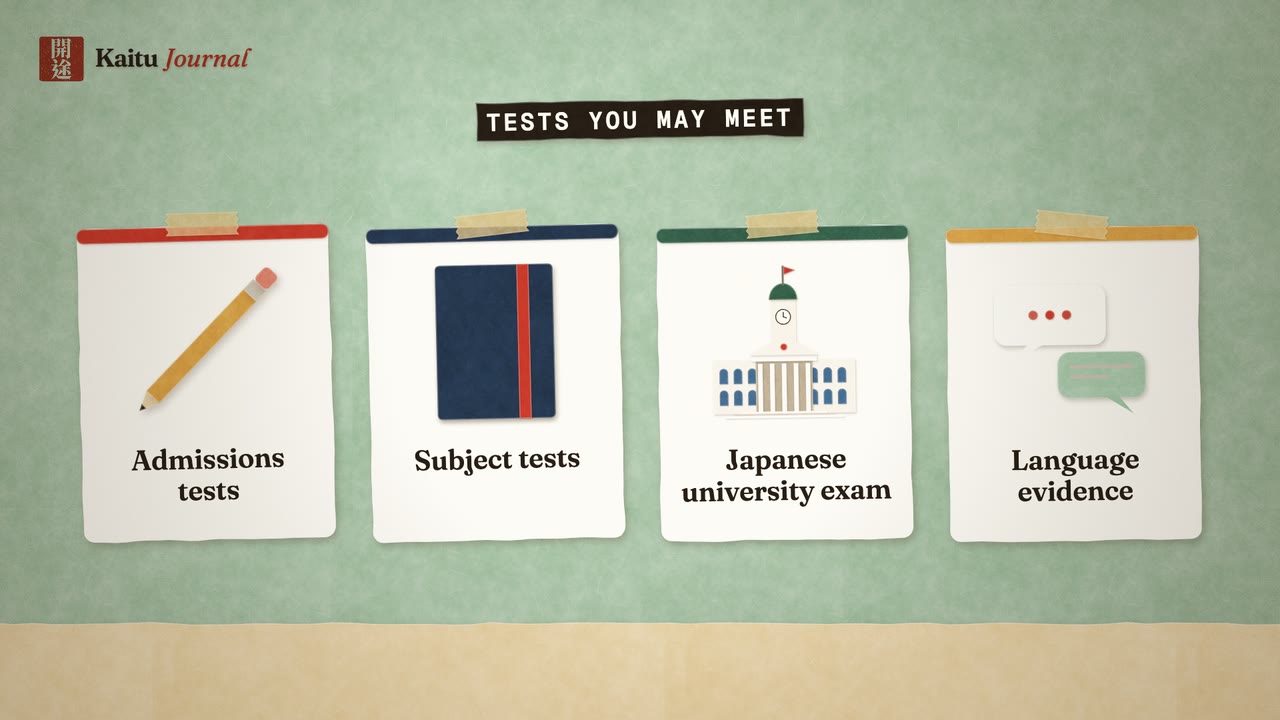
For many courses, the written application is only the first stage. Competitive subjects, creative programmes and certain universities add an interview, a portfolio review or an audition before making an offer. These stages can feel intimidating, but they are also an opportunity: a chance for the student to show qualities that do not come through on paper.
Know what the stage is for
Start by finding out exactly what the university is assessing. Course pages, admissions blogs and departmental guidance often explain the format and purpose in some detail. Broadly:
- Academic interviews usually test how a student thinks about their subject, how they handle unfamiliar problems and whether they can learn from guidance.
- General or values-based interviews, common in fields such as medicine and teaching, explore motivation, communication and judgement.
- Portfolio reviews look at creative or technical ability, development over time and the thinking behind the work.
- Auditions assess performance skill, potential and responsiveness to direction.
Formats vary between universities and change over time, including whether stages happen online or in person. Always check the current instructions for each course.
Preparing for an interview
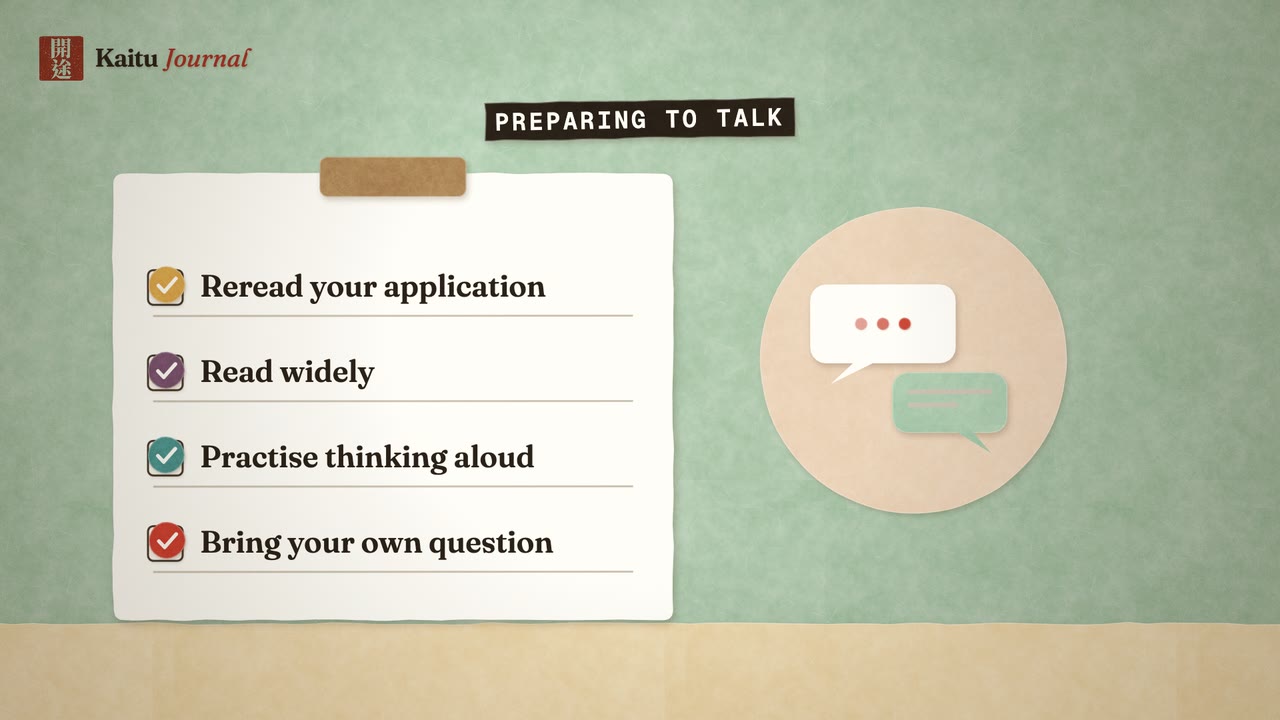
The most effective preparation is thinking aloud. Admissions interviewers are rarely looking for a correct answer delivered quickly. They want to see a student reason through a problem, ask clarifying questions and change course when given a new piece of information.
Useful practice includes:
- Discussing unfamiliar problems or texts in the subject with a teacher or mentor.
- Rereading the personal statement and being ready to discuss anything mentioned in it in more depth.
- Reading beyond the syllabus, so that conversation can range a little further.
- Practising explaining ideas clearly and concisely to someone outside the subject.
Avoid memorising scripted answers. They tend to sound rehearsed, and interviewers often move the conversation in directions a script cannot anticipate.
Building a portfolio
A portfolio should be curated, not exhaustive. Read the university's requirements closely: the number of pieces, preferred formats, whether sketchbooks or process work are expected and how work should be submitted.
Strong portfolios generally:
- Show range, while making the student's strongest work prominent.
- Include evidence of process, such as development sketches, drafts and experiments.
- Present work clearly, with brief labels where context helps.
- Feel coherent, so a reviewer gains a sense of the person behind the work.
Ask a teacher or practitioner in the field to review the selection. A fresh eye helps decide what to leave out.
Preparing for an audition
Audition requirements are usually precise, so follow them exactly, including repertoire, timing and any recorded submission guidelines. Choose pieces that show the student at their best rather than the most difficult option. Practise performing in front of others, not just alone, and prepare for the possibility of being asked to try something differently. Responsiveness to direction is often part of what is being assessed.
On the day
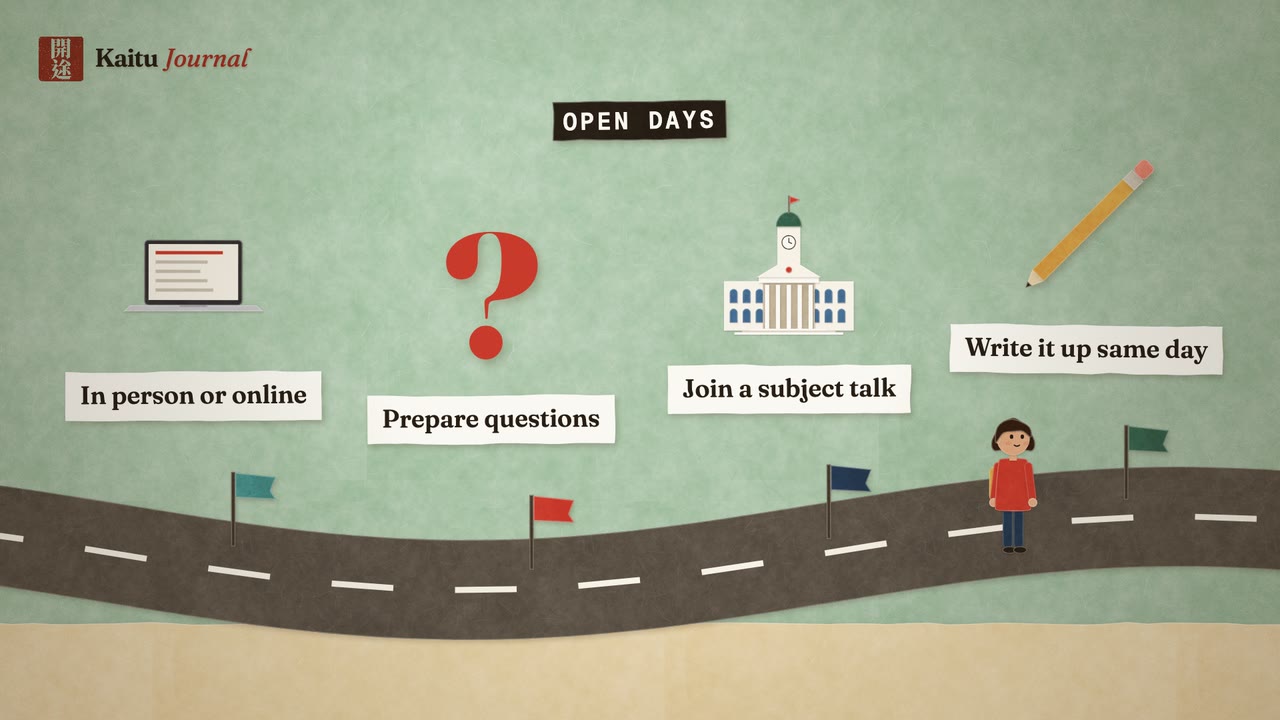
Practical preparation reduces nerves. Check the time, location or technology well in advance. For online stages, test the camera, microphone and connection, and choose a quiet, well-lit space. Arrive or log in early. If a question is unclear, it is perfectly acceptable to ask for clarification or a moment to think.
Afterwards, write down what went well and what was difficult. Those notes are useful if there is a further stage or another interview soon.
How Kaitu helps
We run mock interviews, portfolio reviews and preparation sessions tailored to each course. Explore our admissions service or join a session through the Kaitu Academy.