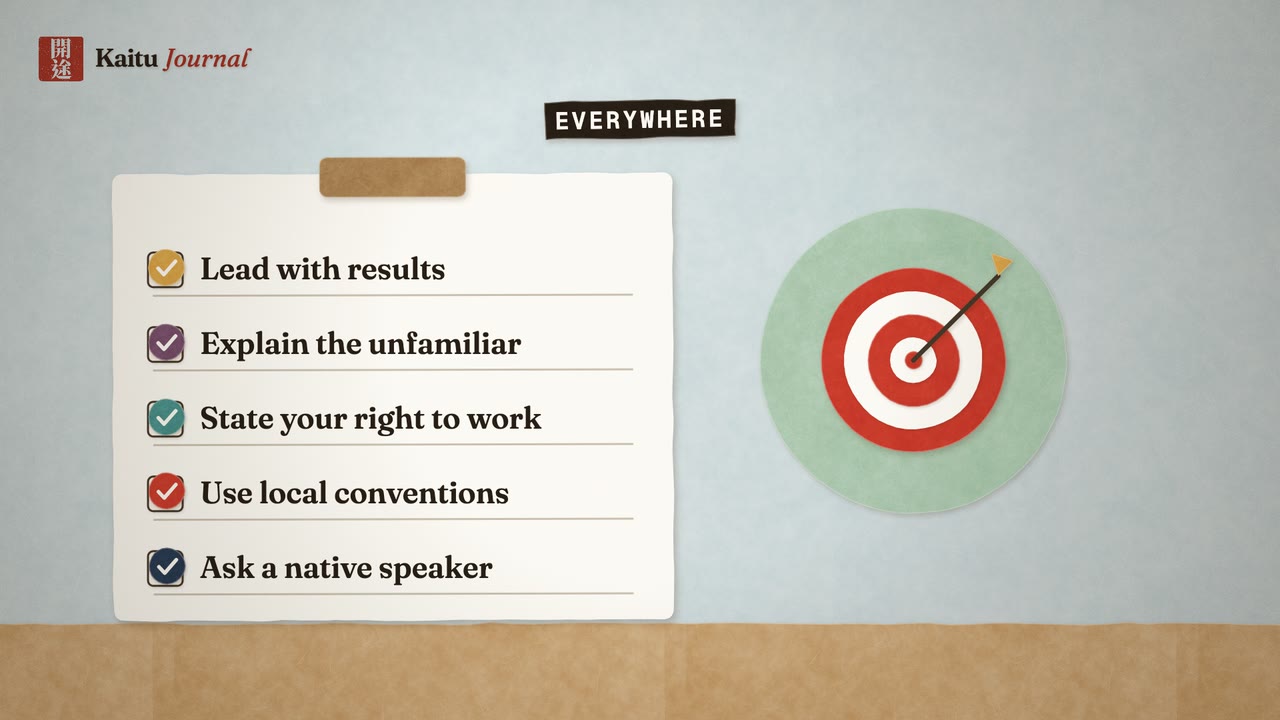
Recruiters skim CVs quickly, and they judge them partly on whether they look familiar. A document that follows local conventions signals that you understand the market; one that does not can be set aside before anyone reads your experience. The content of your career stays the same, but the way it is presented often needs to change.
Length and level of detail
Expectations on length vary widely. In some markets a concise document of one or two pages is standard, and anything longer looks unfocused. In others, a longer and more detailed CV is normal, particularly for senior or academic roles, where complete lists of publications or projects may be expected.
Whatever the length, put the most relevant information first. Recruiters in every market appreciate a clear structure and achievements that are easy to find.
Photos and personal details
This is where conventions differ most, and where getting it wrong is most noticeable.
- In some countries a professional photograph is expected, and its absence can seem odd.
- In others, photos are discouraged, partly because of equal opportunities and anti-discrimination practice, and including one may count against you.
- Date of birth, marital status, nationality and number of children are routine in some markets and almost never included in others.
When in doubt, research the specific country and sector, look at examples from reputable local sources, and lean towards including less personal information rather than more.
Format and structure
Most markets favour a reverse chronological layout, with your most recent role first. Beyond that, details vary:
- Some countries expect a short personal profile at the top; others prefer to go straight into experience.
- Certain markets value a standardised format, and in some sectors employers or public bodies use their own templates.
- Education may sit before or after experience depending on local custom and your career stage.
- Hobbies and interests are welcome in some places and considered irrelevant in others.
Keep the design clean. Elaborate layouts can confuse applicant tracking systems, which many employers use to screen applications.
Tone and how you describe achievements
Cultural expectations about self-promotion vary. In some markets confident, results-focused language is expected; in others a more modest and factual tone is better received. Either way, concrete achievements described clearly tend to work well everywhere.
Translate job titles and qualifications into terms local employers will understand, and briefly explain organisations that may be unfamiliar. If your qualifications have been formally recognised in the destination country, say so.
Language
Write the CV in the language of the job advertisement unless told otherwise. If you are applying in a second language, have the document checked by a fluent speaker, ideally one familiar with professional writing in that market. State your language levels honestly, using a recognised scale where one is commonly used.
Your right to work
Many employers want to know early whether you can work in the country. If you already have the right to work, mentioning it can help. If you would need sponsorship, it is usually better to be accurate and to explain the route briefly in your cover letter or when asked.
Cover letters
Cover letters also vary in importance and style. In some markets they are essential and read carefully; in others they are optional. Tailor each one to the role and the local convention.
How Kaitu can help
Our careers team helps clients adapt their CV and cover letter to each target market and prepare for the application process. To find out more, explore our careers services or book a free consultation.