Civil status documents record who you are and how you are related to the people moving with you. Immigration offices, schools, banks and registries all rely on them, and they tend to scrutinise them closely. Before any application begins, it is worth gathering these records, reading them carefully and fixing anything that does not line up.
The core records
Most moves draw on some combination of the following, for every family member they apply to:
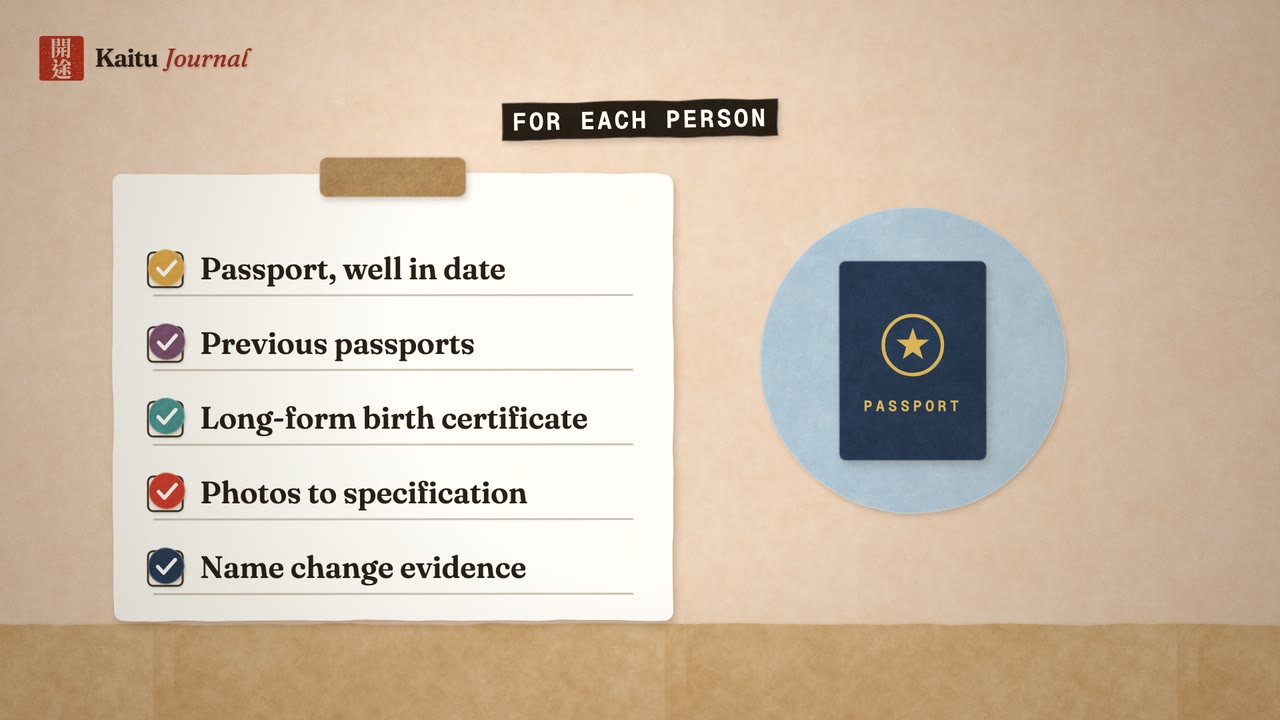
- Birth certificates, preferably the full or long-form version that names both parents.
- Marriage or civil partnership certificates.
- Divorce decrees, dissolution orders or annulments, including for earlier relationships.
- Death certificates of a former spouse, where relevant to your current marital status.
- Name-change documents, such as deed polls, court orders or the record of a name taken on marriage.
- Adoption orders and custody or guardianship arrangements for children.
Short-form or commemorative certificates are often not accepted. Where you have a choice, request the most complete official version available from the issuing registry.
Consistency is everything
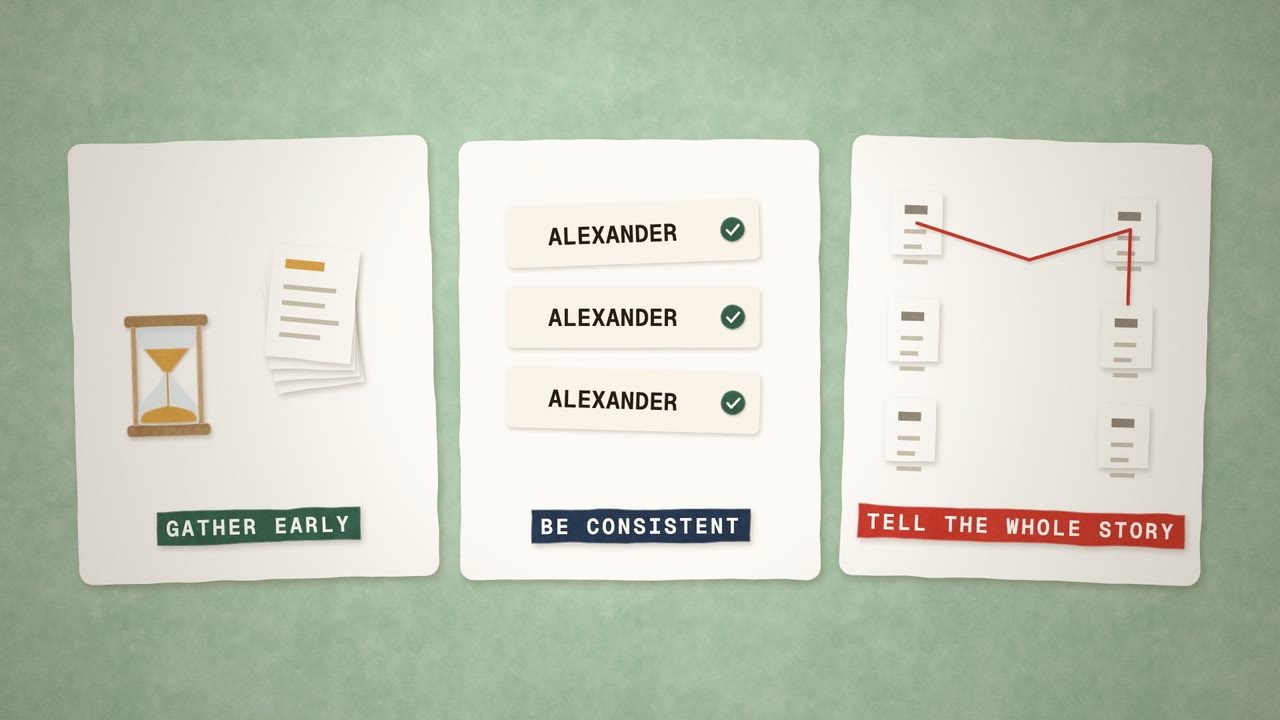
The most common problem is not a missing document but a mismatch between documents. A name spelt differently on a birth certificate and a passport, a missing middle name, a transliteration from another alphabet, or a date written in a different order can all prompt questions.
Lay every record side by side and check:
- full names and their spelling across all documents;
- dates and places of birth;
- parents' names as they appear on each child's certificate;
- the sequence of marriages, divorces and name changes, so that the story is complete and in order.
Where something does not match, you may need a correction from the issuing registry, a formal statement explaining the difference, or a supporting document that links one name to another. These can take time to obtain, which is why it helps to find them early.
Telling the full story of a name
Anyone who has changed their name, whether through marriage, divorce or choice, should be able to show an unbroken trail from their birth name to their current one. Authorities generally want to see each link, not just the first and last.
For families, it also helps to think about children's surnames. If a child's name differs from one or both parents', a birth certificate naming both parents usually makes the relationship clear, but some processes ask for additional evidence.
Records from more than one country
Families who have lived in several countries often hold records issued in different places and languages. Each document normally needs to be obtained from, and authenticated in, the country that issued it. That can mean dealing with several registries at once, sometimes remotely.
If a record was never registered, has been lost, or comes from a place where registries are difficult to access, there are often alternative routes, such as late registration or sworn statements. Which ones a destination accepts varies, so seek advice before relying on them.
Consent and custody for children
When a child moves with only one parent, or with neither, authorities commonly expect to see evidence that the move is agreed. This may be a consent letter from the other parent, a court order, or proof of sole custody. The format required, and whether it must be notarised or authenticated, depends on both the origin and destination countries.
Before you order anything
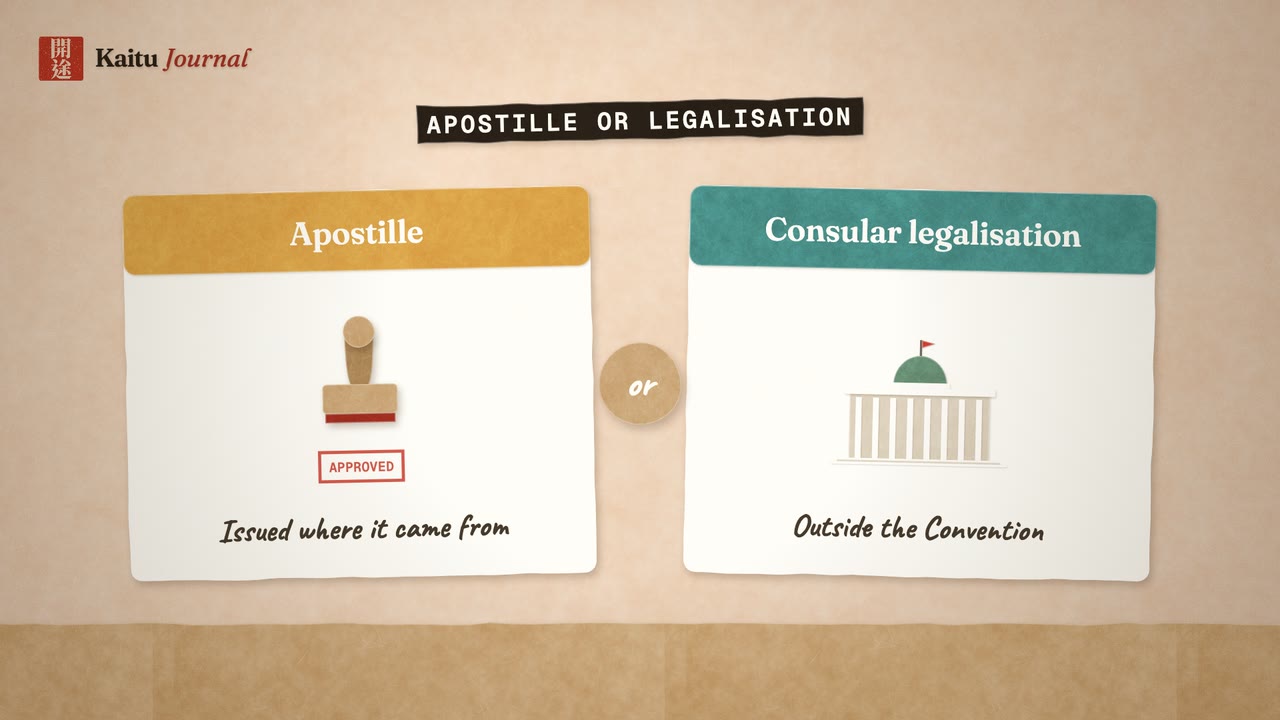
Once your records are complete and consistent, the next steps are usually authentication and certified translation. Check what the receiving authority requires before ordering copies, as some ask for recently issued certificates rather than older originals.
How Kaitu can help
We review civil status records for every family member, flag inconsistencies and plan the corrections, authentications and translations needed for your destination. To begin, book a free consultation or explore our residency services.